Why Anticipation Works in Marketing
"Tylerrr, the mail truck is here."
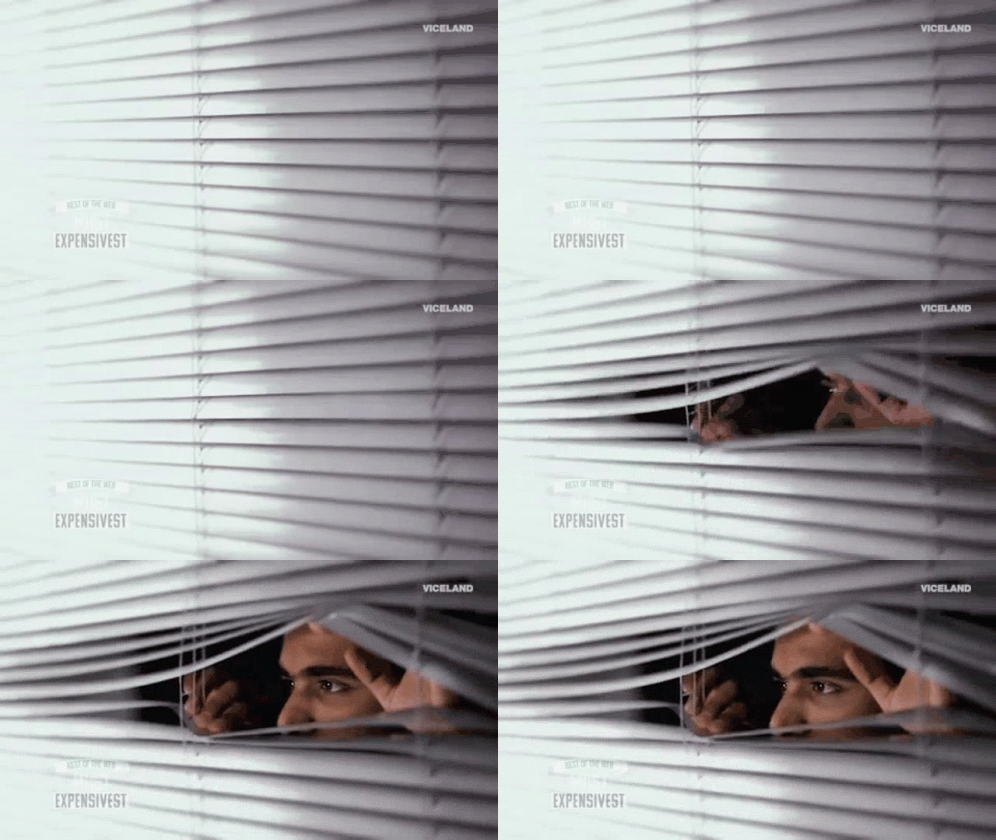
He was at the window before I finished the sentence.
Peeking through the blinds like a school kid begging for a snow day.
He has every song he's ever wanted on Deezer: available in seconds, on his phone, all the time.
Yet, he still orders records.
And before you say "okay but vinyl does sound better"... that's not the point.
He already has the music. Same songs, same albums, all of it already accessible. He didn't want more music.
He wanted the medium.
The ritual.
The "I'm building something" feeling that comes with hunting down a title, bidding and winning, watching the tracking update, and finally tearing open the sleeve.
He's not collecting music.
He's collecting records.
There's a whole different identity attached to that.
I caved and finally started reading This Is Marketing by Seth Godin.
Godin's whole thing is that people don't buy products; they buy better versions of themselves. They buy belonging, status, identity, feeling.
Tyler doesn't want a new way to listen to the same music.
He orders records because he likes being the kind of guy who has a record collection, good taste in music, and a way to display his library.
The anticipation builds that story.
Here's where this gets interesting for marketing.
We've been trained to optimize for speed.
Remove friction. Instant download. One-click everything.
And yes: friction in the wrong places kills conversions, full stop.
But sometimes friction is the product.
Think about the brands that built their entire strategy around the wait: Sneaker releases, restaurant openings, Taylor Swift album rollouts where she breadcrumbs clues and her fans morph into an intelligence agency.
The product hasn't arrived yet, but the fanbase is already experiencing it.
Not theoretically, chemically.
The brain releases dopamine when waiting on something exciting.
If you're waiting on something painful, the likelihood you feel pain is much higher and at a greater level. That's science.
Here's what happens emotionally during the buildup:
- Attention is captured before the product exists. You're marketing before there's anything to market.
- Identity starts forming early. People decide "I'm the kind of person who will have this" before they have it.
- Urgency is real, not manufactured. It hits different when scarcity is genuine.
- The wait becomes an experience itself. Something to talk about, share, build community around.
Slow marketing can be good marketing.
In an instant-everything world, the buildup can be your competitive advantage.
Here's what this looks like in practice:
Tease before you launch.
A "coming soon" message needs to reveal enough that makes viewers ask one specific question. If you don't know what question your audience is asking, the teaser is vague.
Exclusivity can't be gimmicky.
Last year, I attended a seminar on creating ethical urgency. TL;DR is waitlists only work when access is genuinely limited or the community feels curated. "Join 50 others on the waitlist" is more compelling than "get early access." One implies community; the other implies beta testing.
Let people invest before the thing arrives.
Pre-orders, founding member pricing, early-bird lists/ticket prices: these can be more than just revenue mechanics. They're commitment devices. People who wait for something want it more when it arrives.
Turn delivery into an event.
Caraway cookware has an excellent unboxing experience (the product, less so). Remember: the unboxing, the launch email, the "it's live" announcement... these are emotional peaks. Don't rush them.
People don't go to theme parks to wait in line. They go for the moment the ride starts and rightttt before the first drop.
Build the drop.
WHAT I’M READING
THIS IS MARKETING: YOU CAN'T BE SEEN UNTIL YOU LEARN TO SEE BY SETH GODIN
I finally get why people love this man. He's a straight shooter in the best way: clear and direct without being abrupt or jarring. Just really good writing. The book is structured as a series of micro-essays packaged into chapters, so it's incredibly easy to pick up, put down, and find your place. Perfect as a waiting-room-read.
The concept that's stuck with me most is the one about worldviews.
What you believe shapes what you trust, what feels like you, and ultimately what you buy.
Marketing attracts people who already share the same worldviews. Sales happens next: either confirming you found your people, or making the case that their worldview is worth adopting.
If you're a marketer who's up to your gills in strategy and just need someone to talk straight to you... this is for you.
WHAT TYLER IS LISTENING TO
BODY DIAMOND BY GREAT GOOD FINE OK
Tyler immediately put this record on as soon as he grabbed it from the mailbox.
This isn't a hack, but for some albums it is better than others:
Put it on slower, 33RPM.
It becomes moody and sounds like a different genre altogether.
Great Good Fine Ok is the indie pop that's easy background music until suddenly it isn't and you're just... jammin' out.
Now go drop something
P.S. Tyler would also like me to clarify that records do, in fact, sound better. I'm unable to tell the difference, but I remain supportive of his stance.
